
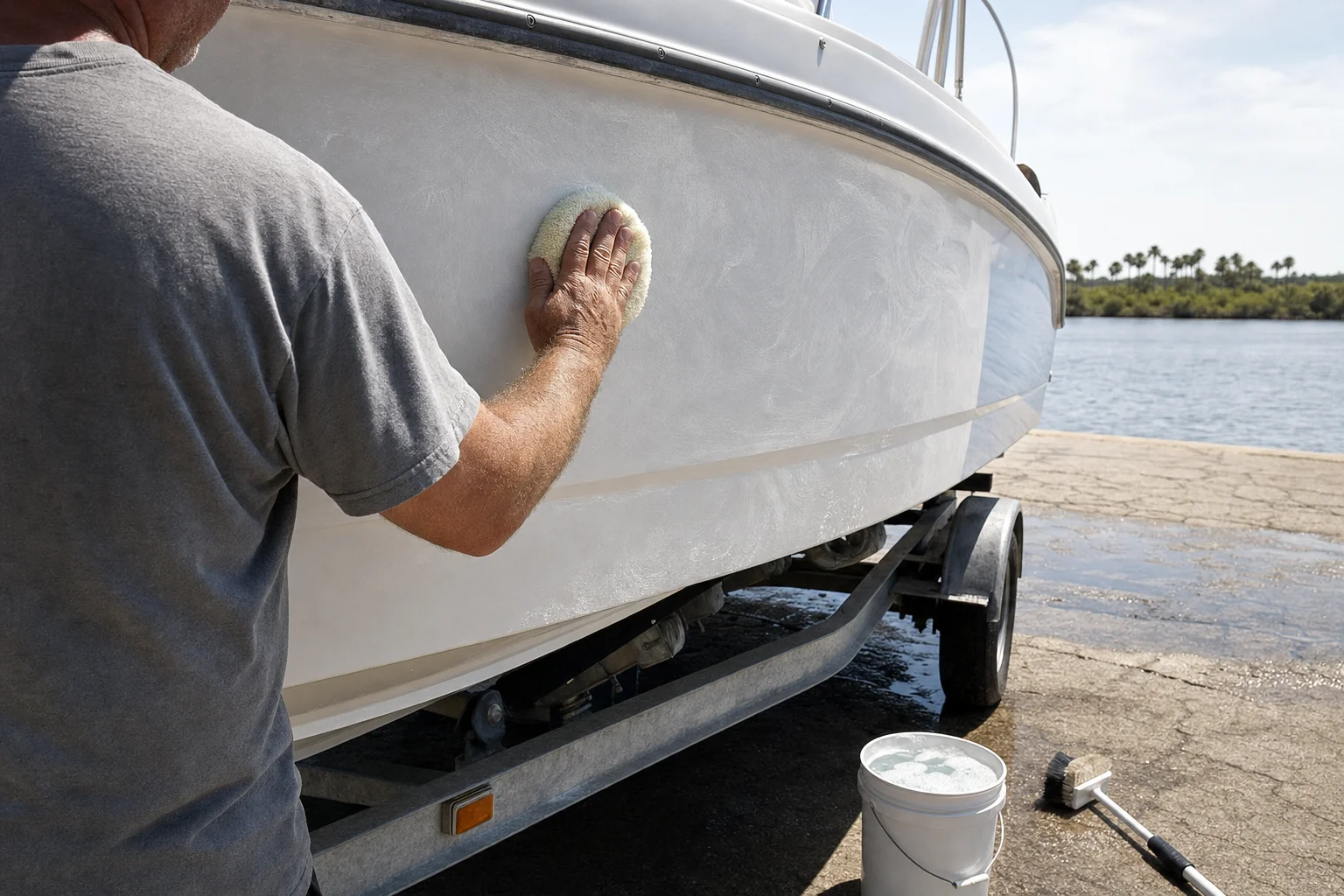
The Connection Between Detailing and Long-Term Boat Health
Most Jacksonville boaters think of boat detailing as a cosmetic task — something you do to make the hull shine before a weekend on the St. Johns River. In reality, a thorough detail is one of the most practical forms of preventive maintenance you can perform. Cleaning, polishing, and protecting every surface gives you — or a trained marine technician — a clear view of what’s actually happening to your vessel beneath the grime, oxidation, and salt residue that accumulates through a full season on the water.
When a mobile marine mechanic arrives to service your boat, a clean hull and interior make diagnostics faster and more accurate. Grease streaks, hairline cracks in the gelcoat, blistering below the waterline, and corroded fittings are all much easier to spot on a clean boat than on one caked with algae and waterline stains.
What a Proper Boat Detail Actually Covers
A full detail is more involved than a rinse and wax. Here’s what a complete job typically includes:
- **Hull washing and degreasing** — removing salt, biological growth, and fuel residue from the entire exterior
- **Oxidation removal and compound polishing** — restoring faded gelcoat or painted surfaces that have dulled from UV exposure
- **Waxing or ceramic coating application** — creating a protective barrier against Jacksonville’s intense sun and brackish water
- **Deck scrubbing and teak treatment** — preventing mold and mildew that thrive in Florida’s humidity
- **Interior cleaning** — upholstery, bilge area, and console surfaces where moisture and salt air cause hidden deterioration
- **Metal polishing** — cleats, rails, and hardware that corrode quickly in the saltwater environment of the Intracoastal Waterway and Atlantic coast
Each of these steps removes contaminants that, if left in place, accelerate wear on fiberglass, rubber seals, and metal components.
Jacksonville's Environment Makes Regular Detailing Non-Negotiable
Boating in Northeast Florida means constant exposure to a combination of conditions that are unusually harsh on vessel surfaces. The brackish water of the St. Johns River deposits minerals that etch gelcoat over time. The Atlantic coast introduces heavy salt spray. Florida’s UV index is among the highest in the country, and it doesn’t let up much even in winter months when Jacksonville’s mild climate keeps boats in the water year-round.
Oxidation — that chalky, faded look on neglected fiberglass — isn’t just ugly. It means the surface is breaking down at a molecular level, which eventually leads to porosity and water absorption. Once fiberglass begins absorbing water, you’re looking at osmotic blistering, which is a much more expensive repair than a simple polish-and-wax job would have been.
For commercial watercraft that operate daily on the St. Johns or in the Intracoastal, the timeline is even more compressed. Salt and biological fouling build up faster under heavy use, and a neglected hull creates drag that increases fuel consumption.
How Detailing Supports Mechanical Maintenance
There’s a practical reason mobile marine mechanics appreciate working on a well-maintained, clean boat: problems reveal themselves. Stress cracks near the transom, weeping fittings at the waterline, soft spots in the deck — these are all findings that come to light during or after a thorough cleaning.
If you’re scheduling an engine service, electrical inspection, or trailer maintenance, having the boat detailed beforehand means the technician spends time on the actual repair rather than working around contamination. It also means you get a cleaner bill of health — or a more accurate list of issues — because nothing is hidden under a layer of grime.
For boats that have been sitting through the off-season, a detail combined with a full mechanical inspection is the most efficient way to get back on the water safely when spring arrives.
When to Schedule Detailing in Jacksonville's Boating Calendar
Jacksonville’s boating season peaks in spring and summer, but the mild winters mean many recreational and commercial vessels stay active through the cooler months. A practical schedule looks like this:
- **Pre-season (February–March):** Full detail combined with an engine tune-up and systems check before peak demand hits
- **Mid-season (June–July):** A maintenance wash and wax to address UV damage and salt accumulation from heavy spring use
- **Post-season (October–November):** A thorough detail before any extended storage or reduced-use periods, which prevents contaminants from bonding to surfaces over time
Boats kept in the water at local marinas — particularly those exposed to tidal movement and biological growth — benefit from more frequent hull cleaning, sometimes every few months depending on conditions.
Treating boat detailing as a scheduled maintenance task rather than an occasional luxury keeps repair costs predictable, extends the life of your vessel’s surfaces, and ensures that when a mechanic looks at your boat, they’re seeing the actual condition of the hull — not a problem hidden under a season’s worth of neglect.